


The top roof of Africa
Climb with us for safety
Unforgettable Experience
Over decades of
climbing experience
we are eco friendly
MT. CLIMBING AND TREKKING
Proper Acclimatization Guidelines
The following are recommended to achieving acclimatization:
• Pre-acclimatize prior to your trip by using a high altitude training systems.
• Ascend Slowly. Your guides will tell you, "Pole, pole" (slowly, slowly) throughout your climb. Because it takes time to acclimatize, your ascension should be slow. Taking rest days will help. Taking a day increases your chances of getting to the top by up to 30% and increases your chances of actually getting some enjoyment out of the experience by much more than that.
• Do not overexert yourself. Mild exercise may help altitude acclimatization, but strenuous activity may promote HAPE.
• Take slow deliberate deep breaths.
• Climb high, sleep low. Climb to a higher altitude during the day, then sleep at a lower altitude at night. Most routes comply with this principle and additional acclimatization hikes can be incorporated into your itinerary.
• Eat enough food and drink enough water while on your climb. It is recommended that you drink from four to five liters of fluid per day. Also, eat a high calorie diet while at altitude, even if your appetite is diminished.
• Avoid tobacco, alcohol and other depressant drugs including, barbiturates, tranquillizers, sleeping pills and opiates. These further decrease the respiratory drive during sleep resulting in a worsening of altitude sickness.
• If you begin to show symptoms of moderate altitude sickness, don't go higher until symptoms decrease. If symptoms increase, descend.
Our guides are all experienced in identifying altitude sickness and dealing with the problems it causes with climbers. They will constantly monitor your well-being on the climb by watching you and speaking with you. Twice daily, our guides will conduct tests with a pulse oximeter to measure your oxygen saturation and pulse rate. Additionally, our guides will administer the Lake Louise Scoring Systems(LLSS) to help determine whether you have any symptoms of altitude sickness and the severity.
It is important that you be open, active and honest with your guide. If you do not feel well, do not try to pretend you are fine. Do not mask your symptoms and say you feel OK. Only with accurate information can your guide best treat you.
Of course, there is always the chance that you will have to abandon your climb. In these situations, the guide will tell you to descend. It is not a request, but an order. The guide's decision is final. Do not try to convince him with words, threats or money to continue your climb. The guide wants you to succeed on your climb, but will not jeopardize your health. Respect the decision of the guide.
Pulse Oximeter
Our guides will use a pulse oximeter to measure the oxygen level in your blood
and your pulse rate in the morning and evening. The oximeter is placed on a
climber's fingertip. The oximeter uses two beams of light that shine into small
blood vessels and capillaries in your finger. The sensor reflects the amount of
oxygen in the blood.
Oxygen saturation is a measurement of how much oxygen your blood is carrying
as a percentage of the maximum it could carry. Normal blood oxygen levels at
sea level are 95-100%.


As altitude increases, oxygen saturations decrease. Proper acclimatization
generally brings oxygen saturations higher, which is why these figures typically
rise when oxygen saturations are tested after resting overnight. On Kilimanjaro,
oxygen saturations percentages are regularly in the 80's. However, if oxygen
saturation is ever less than 80%, we monitor that climber very closely.
Bottled Oxygen
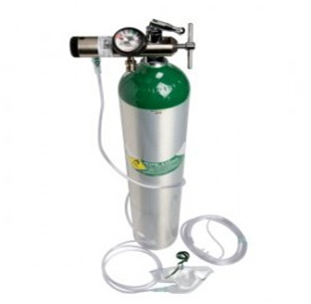
We carry bottled oxygen on all of our climbs as a precaution and additional safety measure.
The oxygen cannister is for use only in emergency situations. It is NOT used to assist clients
who have not adequately acclimatized on their own to climb higher. The most immediate
treatment for moderate and serious altitude sickness is descent. With Kilimanjaro's routes,
it is always possible to descend, and descend quickly. Therefore, oxygen is used strictly to
treat a stricken climber, when necessary, in conjunction with descent, to treat those with
moderate and severe altitude sickness.
We are aware that some operators market the use of supplementary personal oxygen
systems as a means to eliminate the symptoms of AMS. To administer oxygen in this
manner and for this purpose is dangerous because it is a temporary treatment of altitude
sickness. Upon the cessation of the use of oxygen, the client will be at an even higher
altitude without proper acclimatization.

Portable Stretcher
Large, one-wheeled rescue stretchers are found on Mount Kilimanjaro but they are only available within a small area of the park. That means that if a climber is unable to walk due to severe altitude sickness or a leg injury that compromises mobility, getting that climber down the mountain could pose difficult challenges for Kilimanjaro operators. Usually it means assisting the injured climber by carrying him or her on one's back.
We carry a portable stretcher at all times in case of emergencies when a climber is unable to walk on their own and the trekking party is some distance away from the park's stretchers. Our portable stretchers are compact, strong and lightweight. The device can be used to evacuate an injured climber quickly off the mountain. To use, the subject is secured to the stretcher using straps. Then porters hold on to the hand grips to usher the climber to safety.
Diamox and Ibuprofen
Diamox (generic name acetazolamide) is an F.D.A. approved drug for the prevention and treatment of AMS. The medication acidifies the blood, which causes an increase in respiration, thus accelerating acclimatization. Diamox does not disguise symptoms of altitude sickness, it prevents it. Studies have shown that Diamox at a dose of 250 mg every eight to twelve hours before and during rapid ascent to altitude results in fewer and/or less severe symptoms of acute mountain sickness (AMS). The medicine should be continued until you are below the altitude where symptoms became bothersome. Side effects of acetazolamide include tingling or numbness in the fingers, toes and face, taste alterations, excessive urination; and rarely, blurring of vision. These go away when the medicine is stopped. It is a personal choice of the climber whether or not to take Diamox as a preventative measure against AMS.
Tanzania Escapade® neither advocates nor discourages the use of Diamox.
Ibuprofen can be used to relieve altitude induced headaches.
CONTACT US
we will be happy to serve you.
© 2016 Tanzania Escapade


